


|
|

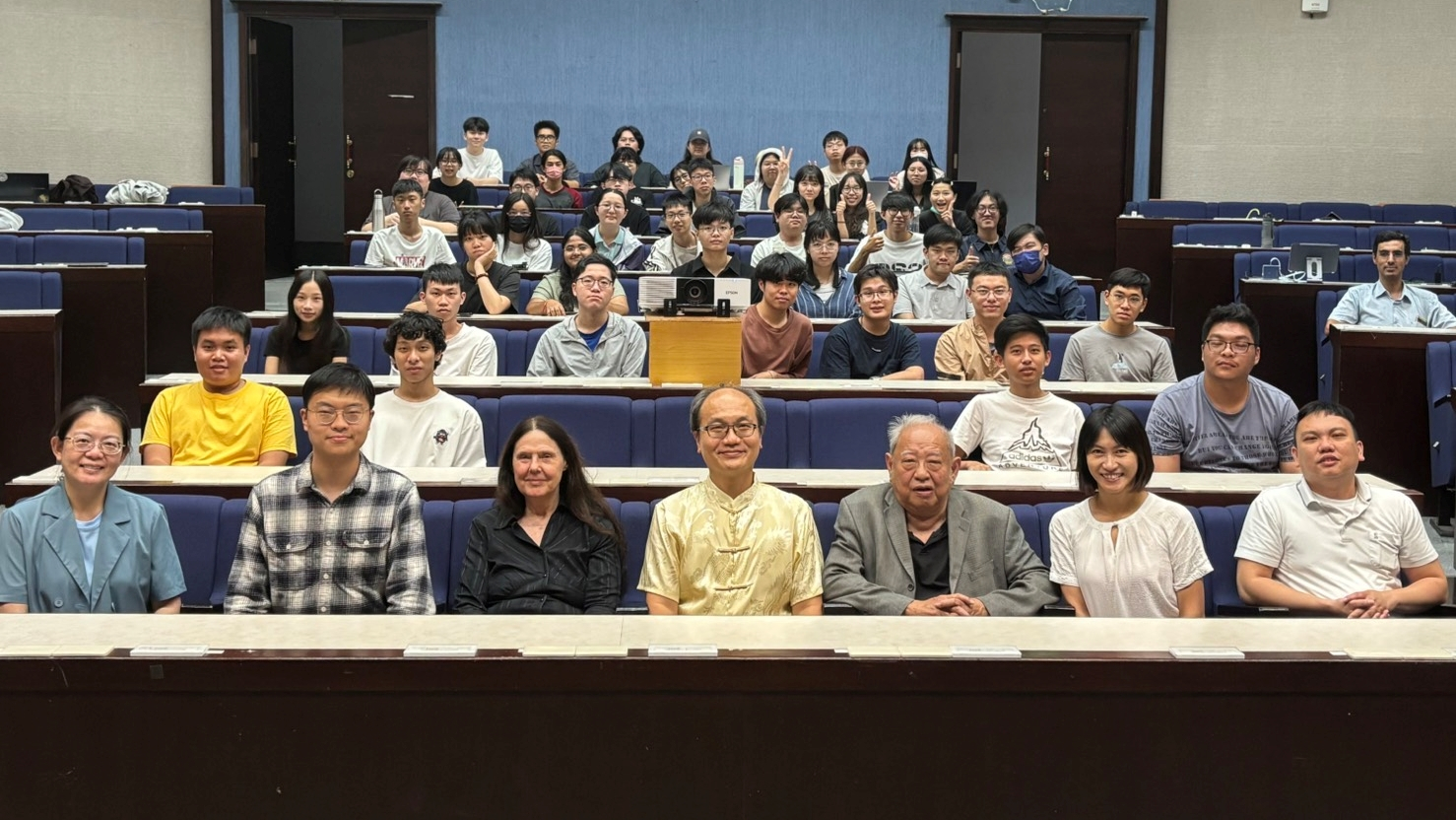

The Department of Chemistry at National Taiwan Normal University (NTNU) leveraged its international connections through the International Union of Pure and Applied Chemistry (IUPAC) to invite renowned chemist Evamarie Hey-Hawkins, Professor Emerita at Leipzig University and a member of the European Academy of Sciences, and her team to Taiwan from October 14 to 19, 2026. Combining chemistry with visual art, the visit featured a science-art exhibition, three academic lectures, and interdisciplinary research discussions, fostering Taiwan–Germany collaboration in medicinal chemistry, biomedical materials, and science communication.
Science Meets Art in an International Exhibition
As part of the academic exchange, NTNU's College of Science opened the Research Visualization: A Scientist’s View exhibition on October 16, marking its first stop in Asia and its first presentation since the project received IUPAC endorsement. The opening ceremony was hosted by Associate Professor Yi-Hsin Liu of the Department of Chemistry.
The exhibition showcased scientific journal cover illustrations by German chemist and artist Christoph Selg, who uses imagery from nature and everyday life to communicate complex concepts in molecular structures, drug design, and biochemical processes. By combining scientific research with visual storytelling, the exhibition offered visitors a more accessible way to engage with chemistry.
The opening ceremony brought together scholars and researchers working across chemistry, science education, and visual communication. NTNU Professor Emerita Mei-Hung Chiu and a representative of the Chemical Society Located in Taipei discussed the role of art in making scientific knowledge more accessible. Brian Li, co-chair of the IUPAC ART/SCIENCE project, introduced the international collaboration behind the exhibition, while Selg and Hey-Hawkins shared perspectives on the relationship between scientific research and artistic expression.
The exhibition featured works using animal imagery and familiar scenes to illustrate scientific ideas. Carborane Dogs explored enzyme interactions and molecular design, while The Journey Through used sea turtles to represent scientific exploration in drug research. Other works illustrated collaboration through ant colonies and invited visitors to discover chemical clues embedded in the artwork.
Accompanied by bilingual descriptions and an exhibition catalog, the displays offered students and visitors without specialized chemistry backgrounds new ways to engage with scientific research. More than 100 visitors attended the exhibition on its opening day. Feedback highlighted how the illustrations and bilingual explanations made scientific concepts more accessible, inspiring visitors to explore creative ways of communicating scientific knowledge.
Exploring Medicinal Chemistry and Biomedical Applications
Beyond the exhibition, the German delegation participated in academic discussions on medicinal chemistry, molecular design, and biomedical applications.
On October 16, Hey-Hawkins delivered a lecture at NTNU's International Conference Hall on metal-based anticancer drugs. Building on existing platinum-based therapies, she discussed research into structural modifications of metal complexes and drug-delivery strategies aimed at improving tumor selectivity, reducing toxicity, and addressing drug resistance.
Academician Chung-Yuan Mou of National Taiwan University's Department of Chemistry also attended the lecture and exchanged perspectives with faculty members and students on metal-based therapeutics and materials research. The discussions highlighted potential research directions, while recognizing that the clinical benefits of these approaches require further validation.
On October 19, Hey-Hawkins delivered a lecture at NTNU, engaging with researchers from the Institute of Atomic and Molecular Sciences at Academia Sinica. She discussed the potential medical applications of boron-containing compounds, including research on boron neutron capture therapy (BNCT), highlighting the interdisciplinary connections among inorganic chemistry, molecular design, and biomedical research.
Later that day, Selg delivered a lecture at NTNU's College of Science on carborane medicinal chemistry and approaches to communicating complex chemical research through visual art. Together, the three lectures attracted more than 300 attendances, with over 15 professors participating. A total of 25 faculty members took part in post-lecture exchanges, providing opportunities for interdisciplinary dialogue and potential research collaboration.
Building Long-Term Academic and Cultural Connections
Beyond the lectures and exhibition, the visit strengthened academic and cultural ties between NTNU and its German partners. The delegation met with Jein-Shan Chen, Dean of NTNU's College of Science, and joined faculty members and researchers to explore shared research interests and potential collaborations. Cultural visits, including the National Palace Museum, also provided opportunities to deepen mutual understanding.
Research discussions continued beyond the visit. Hey-Hawkins shared literature on platinum(IV) complexes and mesoporous silica carriers with Academician Chung-Yuan Mou, opening the door to further collaboration in drug design and biomedical materials. By connecting Taiwan's expertise in materials research with Germany's work on metal-based drugs and boron-containing compounds, the exchange laid the groundwork for future interdisciplinary research partnerships.
For NTNU, hosting the delegation provided an opportunity to strengthen Taiwan–Germany research partnerships in medicinal chemistry and biomedical materials while integrating scientific communication and interdisciplinary learning into its broader educational mission.

