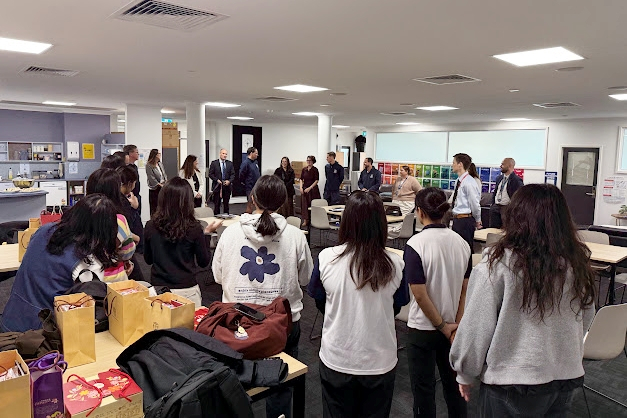
With support from Taiwan’s Ministry of Education, nine pre-service teachers from National Taiwan Normal University (NTNU), led by Professor Yi-Fen Yeh of the School of Teacher Education, traveled to the Gold Coast, Queensland, Australia, from August 1 to 15 for a two-week educational observation program at Emmanuel College and Josiah College.
Through classroom observations, professional exchanges with local teachers, and cultural activities, the NTNU students gained firsthand experience of Australian classrooms and teaching practices. The program also gave them opportunities to participate in school activities, experience a different educational environment, and reflect on how approaches they observed in Australia might inform their future teaching in Taiwan.
Learning from Australian Classrooms
Six NTNU students were placed at Emmanuel College and three at Josiah College. Emmanuel College emphasizes character development, while Josiah College is a specialist school. The two schools are located near each other and regularly organize activities together.
The pre-service teachers observed classes across different year levels, focusing on curriculum planning, teaching strategies, learning activities, and teacher-student interaction. They found that Australian classrooms placed strong emphasis on learning tasks and students’ learning processes.
Rather than relying primarily on teacher-led instruction, teachers incorporated films, online interactive games, classroom discussions, and digital tools into their lessons. Students gathered information, discussed questions, and completed tasks, while teachers provided guidance and support based on their progress and performance.
The NTNU students observed that active classroom participation was shaped not only by individual teaching strategies, but also by the overall design of learning activities and the relationships teachers had developed with their students over time.
Discussions with Australian teachers further showed that students’ willingness to speak, answer questions, and participate in discussions was not simply a matter of cultural difference. It was also supported by varied teaching strategies, positive feedback, and a safe and supportive learning environment. These observations encouraged the pre-service teachers to consider how they might build a classroom culture that supports active student participation in their own future teaching.
Sharing Taiwanese Culture in Australian Classrooms
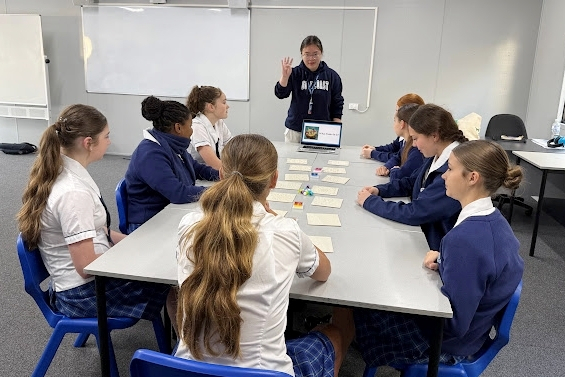
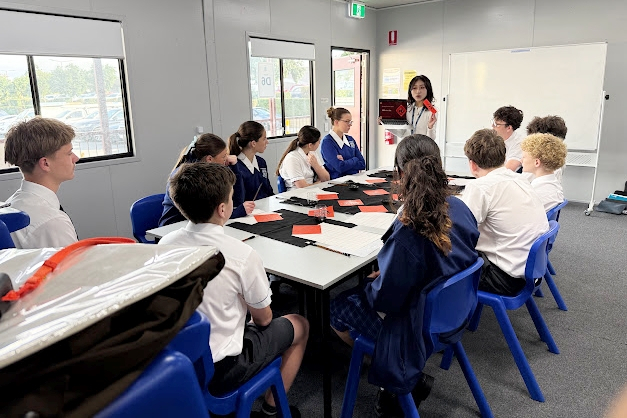
Beyond classroom observation, the nine pre-service teachers designed and taught cultural lessons introducing aspects of Taiwan to Australian students. Topics included Chinese calligraphy, Taiwanese decorative tiles, Gomoku, and diabolo. Each lesson was adapted to students’ ages, backgrounds, and classroom settings and included opportunities for interaction and hands-on participation.
Preparing and teaching these lessons gave the NTNU students an opportunity to apply what they had learned in teacher education to a different cultural and educational setting. From selecting topics and preparing materials to explaining Taiwanese culture in English, they had to consider how familiar cultural content could be transformed into learning experiences that Australian students could understand and enjoy.
The Australian students responded with enthusiastic questions about Chinese and everyday life in Taiwan, requiring the pre-service teachers to adjust the pace and activities of their lessons as they taught. The exchange became a two-way learning experience: while introducing Taiwan to Australian students, the NTNU students also gained new perspectives on their own culture and strengthened their teaching skills.
From Observation to Practice and Reflection
The experience also encouraged the pre-service teachers to reconsider the relationship between lesson planning and the role of the teacher. Whether observing Australian teachers or leading their own cultural lessons, they found that classroom teaching often involves situations that cannot be fully anticipated in advance.
Students’ questions, levels of participation, and responses can all affect how a lesson unfolds. Teachers therefore need to maintain their learning objectives while adjusting their approaches to the needs of the classroom.
For the NTNU students, these experiences provided an opportunity to put their knowledge of curriculum and instruction, assessment, and teacher-student interaction into practice. They came to see that professional teaching involves not only subject knowledge and pedagogical knowledge, but also the ability to continually observe, assess, and respond to students’ learning. Through a process of observation, practice, and reflection, they connected educational theory with classroom experience.
Learning Beyond the Classroom
The program marked the School of Teacher Education’s first educational visit to Australia with a group of pre-service teachers. During their stay on the Gold Coast, the group also received assistance from Experience Gold Coast.
Before departure, all nine participants completed Queensland’s Blue Card application process, which is required for people working or volunteering with children in regulated settings. Preparing for the trip, completing the necessary administrative procedures, and adapting to life overseas gave the students additional opportunities to develop teamwork and problem-solving skills.
Living in Australia also required the students to manage the higher cost of daily life, including preparing their own meals and organizing their routines. Supporting one another both inside and outside the schools helped them develop greater independence, adaptability, and teamwork.
Building New Connections through International Teacher Education
The program marked the first exchange between NTNU and Emmanuel College and Josiah College, creating opportunities for students and educators to learn from one another while establishing a foundation for future interaction.
NTNU plans to continue expanding international partnerships in teacher education and providing pre-service teachers with opportunities for cross-cultural learning and practice. Through experiences in different educational environments, future teachers can broaden their perspectives, reflect on different approaches to education, and prepare for increasingly diverse and global classrooms.