


|
|
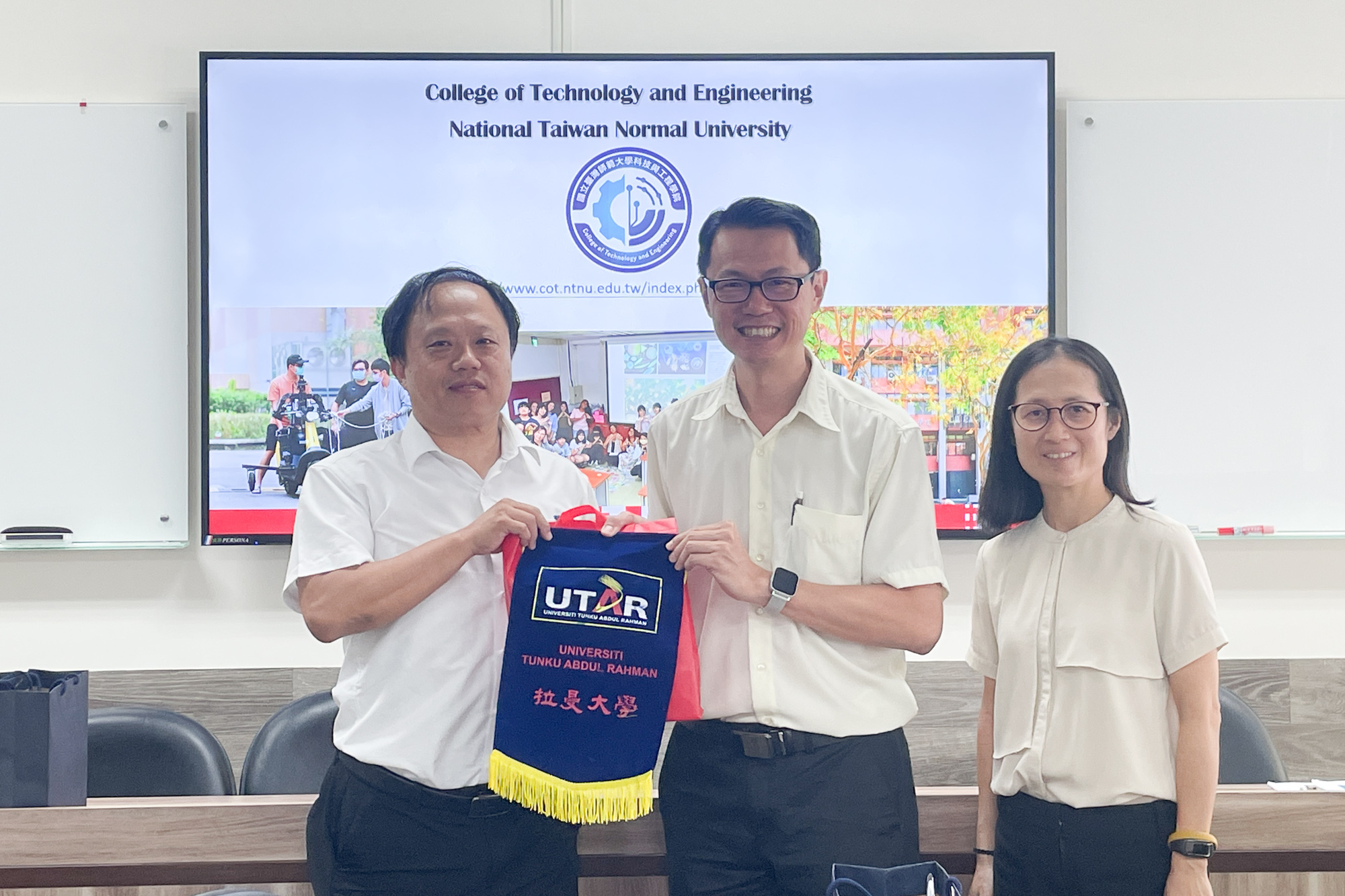
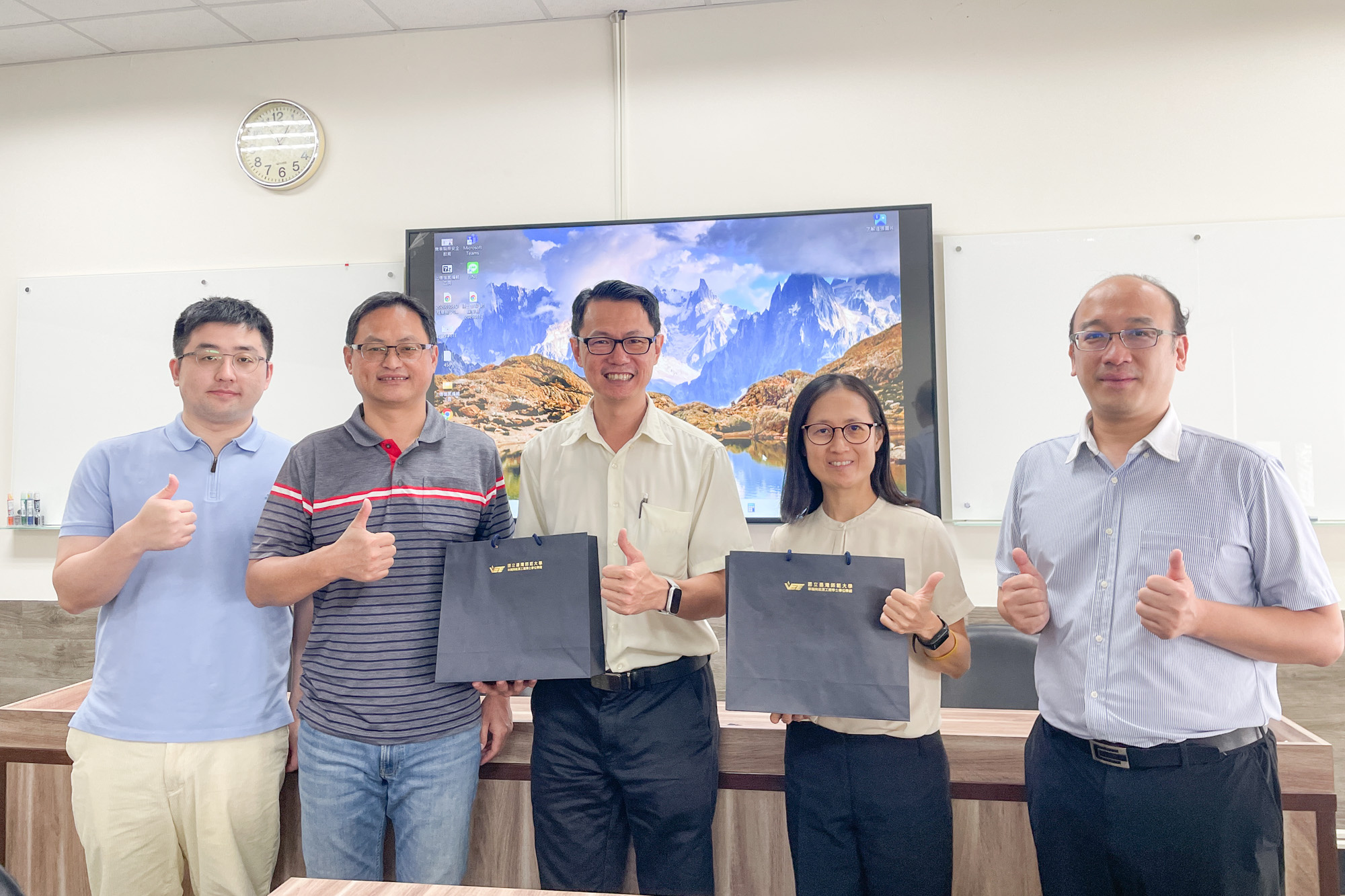
Professors Chua Kein Huat and Hsiao-Fen Cheng from Universiti Tunku Abdul Rahman (UTAR) in Malaysia visited the College of Technology and Engineering at National Taiwan Normal University (NTNU) on August 17 to explore new opportunities for academic exchange and cooperation.
The visitors were welcomed by Dean Yi-Hsuan Hung of the College of Technology and Engineering, along with Professors Chun-Hsin Chang, Wen-Yu Wang, and Hwa-Dong Liu. The two sides discussed student development, student exchanges, dual-degree programs, and future research collaboration, laying the groundwork for closer ties between NTNU and UTAR.
Highlighting Interdisciplinary Teaching and Research
Dean Hung introduced the development of the College of Technology and Engineering, its academic programs, and its teaching and research achievements. The College brings together expertise across a wide range of fields, including semiconductors, robotics, electrical engineering, industrial education, and vehicle and energy engineering.
The College emphasizes technological innovation and engineering education, combining academic knowledge with practical training. The visit also opened discussions on future cooperation in teaching and research. Professor Chua, Chairperson of UTAR’s Centre for Railway Infrastructure and Engineering, has long been involved in railway and infrastructure research, which closely aligns with NTNU’s work in vehicle and energy engineering. During the meeting, faculty members exchanged views on rail transportation, vehicle technology, infrastructure, and engineering education, while discussing possibilities for future research and student development projects.
Connecting Vehicle and Energy Engineering with Industry
Professor Hwa-Dong Liu introduced NTNU’s Institute and Undergraduate Program of Vehicle and Energy Engineering, including its development, curriculum, faculty expertise, research areas, and student training.
The program integrates theory with practical experience through professional courses, hands-on training facilities, and industry applications. Students are encouraged to apply what they learn in the classroom to real-world engineering practice and prepare for further study or future careers. In recent years, the program has also expanded its international exchanges, maintaining close ties with UTAR while exploring opportunities for cooperation with universities in the United States, India, and other countries.
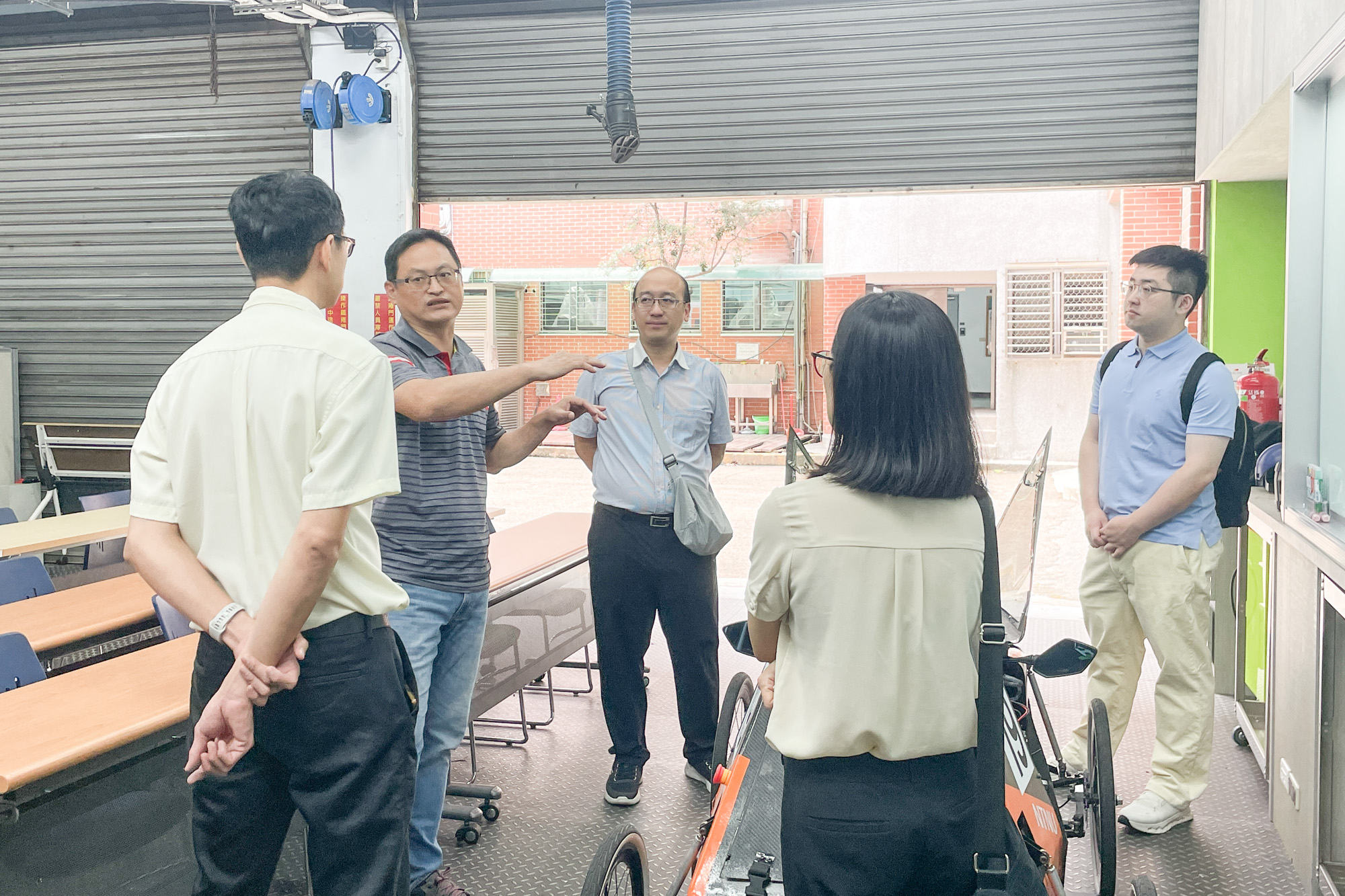
Professor Chun-Hsin Chang led the UTAR visitors and NTNU faculty on a tour of the vehicle engineering training facilities. The group first visited a student racing team showcase, where they learned about the process of designing, building, and testing competition vehicles, as well as the team’s first-place competition result. The project demonstrated students’ practical skills in vehicle design, engineering integration, problem-solving, and teamwork.
The visitors then toured the internal combustion engine teaching facilities and learned about the related curriculum and training equipment. Although the global automotive industry is moving toward electrification, internal combustion engine technology remains an important part of vehicle engineering education.
Professor Chang also introduced teaching equipment for electric vehicles, chassis systems, and powertrains. Using actual vehicles and professional equipment, students can study electric vehicle structures, chassis systems, power transmission, and performance analysis, gaining practical experience with current developments in vehicle technology.
Exploring Student Exchanges and Dual-Degree Programs
Faculty members from NTNU and UTAR held an online meeting with Professor Lai Soon Onn, Director of UTAR’s Office of International Affairs, and other administrators. The discussion focused on student exchanges, dual-degree programs, and other opportunities for international collaboration. Participants also exchanged views on possible cooperation through the International Internship Pilot Program (IIPP) and the Taiwan Experience Education Program (TEEP).
NTNU and UTAR plan to prioritize student exchanges while continuing to explore possible models for dual-degree programs. The two universities will also seek opportunities through international cooperation programs supported by Taiwan’s National Science and Technology Council and Ministry of Education, with the aim of creating more opportunities for students to study, conduct research, and gain practical experience across borders.
At noon, faculty members from NTNU and UTAR continued their discussions over lunch, sharing experiences in teaching and research as well as perspectives on education and student development in Taiwan and Malaysia.
Strengthening Two-Way Exchange
In recent years, NTNU’s College of Technology and Engineering and its Vehicle and Energy Engineering programs have continued to expand their international engagement. In addition to encouraging faculty and students to participate in exchanges in Malaysia, NTNU has also welcomed faculty members from overseas partner universities to Taiwan.
The visit by the UTAR scholars reflects a growing two-way partnership between the universities, moving beyond individual visits toward reciprocal exchange and jointly planned collaboration.
The visit strengthened mutual understanding between faculty members at NTNU and UTAR and laid the groundwork for further cooperation in research, student development, student exchanges, and dual-degree programs. Both universities look forward to building on their respective strengths and developing new opportunities for international education and engineering research.

