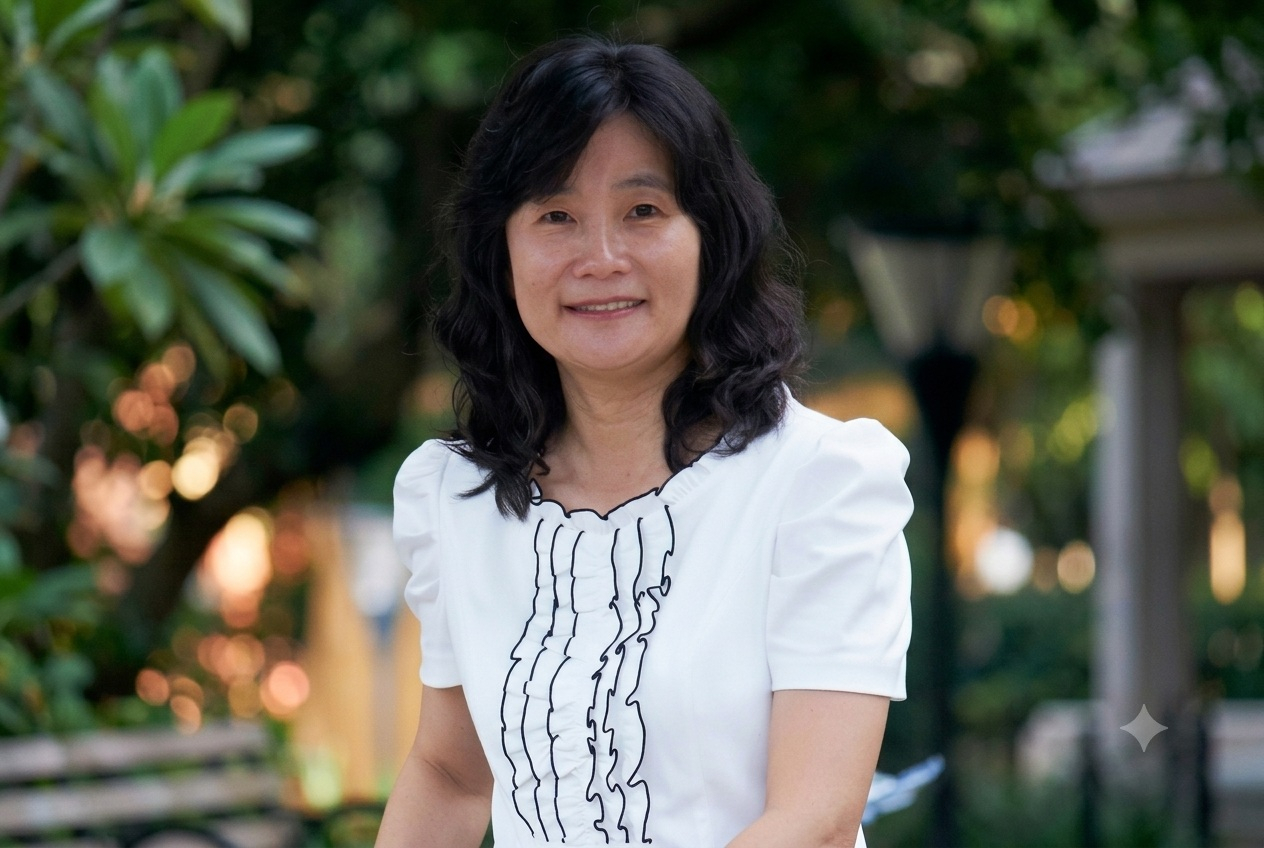
Chair Professor Ying-Shao Hsu of the Graduate Institute of Science Education
Chair Professor Ying-Shao Hsu of the Graduate Institute of Science Education, College of Science, National Taiwan Normal University (NTNU), has received dual recognition from the East-Asian Association for Science Education (EASE). She received the EASE Distinguished Research Award, one of the association’s highest honors, and was elected its new President for a term from September 1, 2026, to August 31, 2028.
The honors recognize Hsu’s longstanding achievements in science education research and highlight the academic influence and leadership of Taiwanese scholars within the science education community in East Asia and beyond. They also mark an important milestone in NTNU’s continued efforts to advance educational innovation and international academic exchange.
The EASE Distinguished Research Award recognizes outstanding scholars whose work has made a significant impact on science education through pioneering and original academic contributions. Hsu’s receipt of the award reflects international recognition of her years of dedication to science education research, interdisciplinary educational innovation, and the cultivation of future talent in science.
Hsu graduated from NTNU’s Department of Earth Sciences before earning a master’s degree in atmospheric sciences from National Taiwan University and a doctoral degree in curriculum and instruction from Iowa State University in the United States. She returned to NTNU in 1998 and has since served in the Department of Earth Sciences and Graduate Institute of Science Education, as well as the Office of Research and Development. She became an NTNU Chair Professor in 2019 and has long been dedicated to science education research and innovation in educational technology.
Hsu’s research focuses on the teaching and learning of socioscientific issues (SSI), particularly on how science education can develop students’ scientific literacy, critical thinking, and decision-making skills when addressing complex social issues. Drawing on real-world scientific issues, she integrates digital technologies and interdisciplinary learning theories to develop innovative teaching materials and instructional approaches that help students move from understanding scientific knowledge to inquiry and social practice.
Climate change education has also been a major focus of Hsu’s research. She established a digital instructional materials development community that brings together scientists, school teachers, information technology experts, and science education researchers to develop digital learning resources for future educational needs. Digital learning platforms not only document students’ learning processes but also provide teachers with immediate feedback and help researchers identify learning difficulties, contributing to more individualized and adaptive learning environments.
With the rapid development of artificial intelligence in recent years, Hsu has actively incorporated AI into science education research. She has developed digital learning materials on socioscientific issues that integrate AI-based automated assessment models and real-time feedback mechanisms. By using AI to analyze student performance and provide immediate diagnosis and feedback, these approaches enhance students’ self-directed learning while helping teachers monitor learning outcomes and address challenges in interdisciplinary teaching.
In addition to student learning, Hsu has long focused on teachers’ professional development and technology-integrated science teaching. Her research has developed diagnostic indicators and assessment tools for Technological Pedagogical Content Knowledge (TPACK), including interview tools, self-report scales, and online questionnaires incorporating teaching videos. These tools help examine the professional development of science teachers as they integrate technology into their teaching and contribute to teacher education and classroom practice.
Reflecting on receiving the EASE Distinguished Research Award and assuming the presidency, Hsu said that research is like a marathon and that what matters is enjoying the process of exploration and innovation. She expressed gratitude to NTNU and the National Science and Technology Council for their long-term support, as well as to her research partners whose collaboration has enabled interdisciplinary research and innovation to continue developing and making an impact within the international academic community. As EASE President, Hsu will lead the association in further strengthening regional exchanges in science education research, promoting international collaboration and educational innovation, and raising the global visibility of science education in East Asia.
Hsu’s international recognition represents not only an important achievement in her research career but also a significant honor for Taiwan’s science education community. NTNU will continue to support faculty participation in international academic exchange and forward-looking educational innovation, further demonstrating the strength of Taiwan’s education research on the global stage.