


|
|
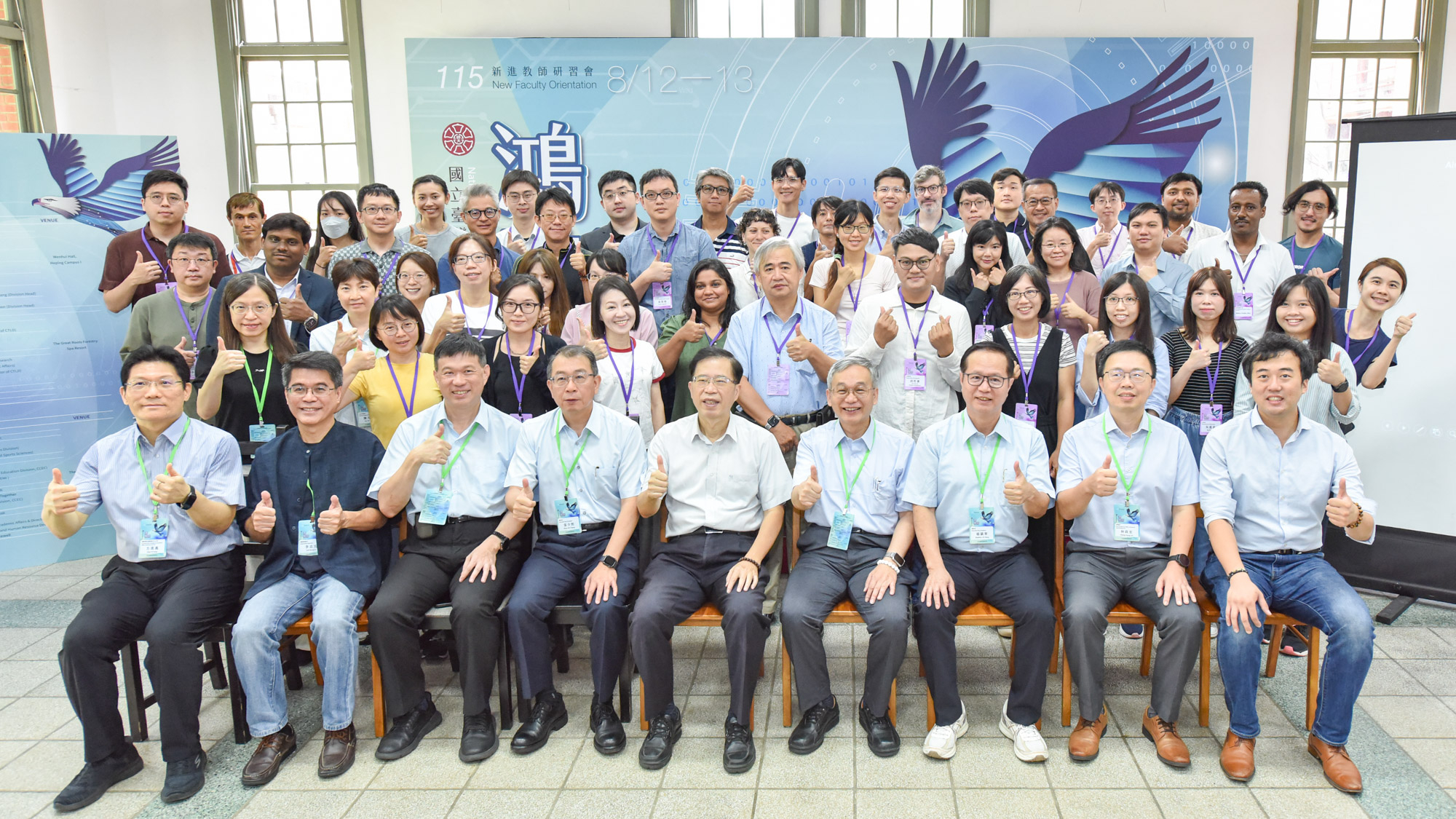
With the new academic year beginning on September 7, National Taiwan Normal University (NTNU) held its New Faculty Orientation from August 12 to 13 to help newly appointed faculty members become familiar with the University’s teaching and research environment, as well as relevant resources and benefits. Organized by the Center for Teaching and Learning Development under the Office of Academic Affairs, the program welcomed 44 new faculty members as they began their teaching and research careers at NTNU.
This year’s 44 new faculty members represent the largest cohort in nearly a decade. Among them are 12 international scholars from the United Kingdom, Canada, India, Australia, Japan, Malaysia, Ethiopia, Türkiye, and other countries, bringing diverse cultural perspectives and international academic experience to the University.
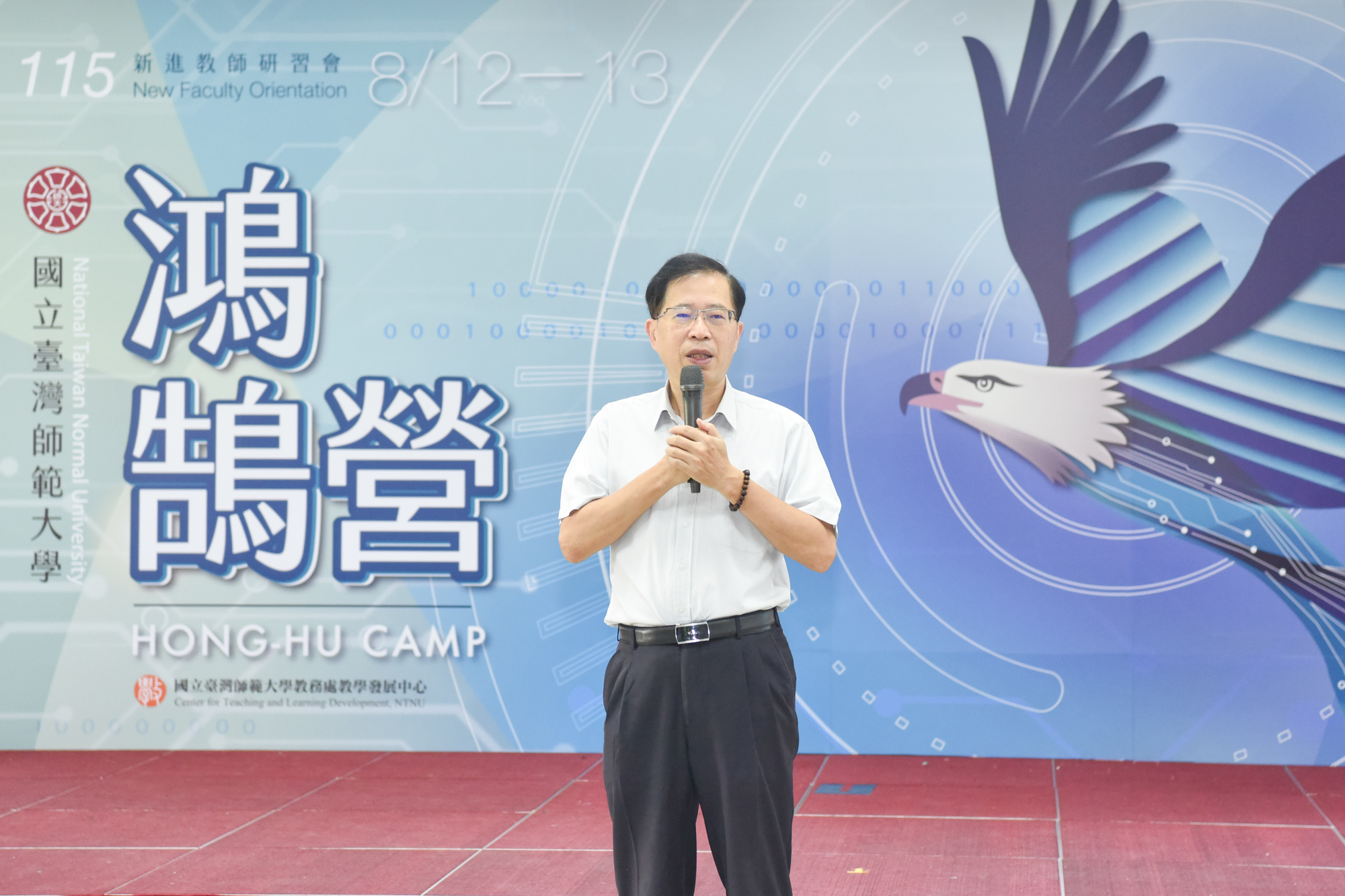
At the opening ceremony, NTNU President Yao-Ting Sung welcomed the new faculty members and shared four expectations for their academic careers. He encouraged them to build on their rigorous academic training while pursuing innovation. He first advised early-career faculty to focus on research, make effective use of available resources, and steadily build their academic achievements. He also encouraged them to apply their research through industry-academia collaboration and social engagement, contribute to university service, make use of NTNU’s teaching and research resources to pursue interdisciplinary collaboration, and maintain their physical and mental well-being while developing their long-term careers in teaching and research.
During the orientation, NTNU administrative units introduced key resources and support available to new faculty members. Dean of Academic Affairs Wen-Wei Hsu said that AI functions will gradually be incorporated into the Moodle learning management system and encouraged faculty members to make effective use of technology to enhance teaching. Vice President for Research and Development Cheng-Hong Lin introduced the University’s research mentoring, support, and early-warning mechanisms, as well as services including year-round review of National Science and Technology Council research proposals, legal consultation for industry-academia collaboration, and patent incubation.
University Librarian Chi-Hung Li encouraged faculty members to establish profiles on NTNU’s open scholar platform and make effective use of ORCID identifiers to enhance the visibility and recognition of their academic work. The Library also provides support for open-access publication in leading journals, as well as Turnitin and AI-based academic paper detection services. The Office of Human Resources and Office of Accounting introduced policies covering salary calculation, health examination subsidies, flexible extensions to promotion deadlines, and simplified reimbursement procedures, helping new faculty members understand the relevant policies and reduce administrative burdens.
The 44 new faculty members represent fields spanning the humanities, education, science, technology, the arts, sports, and health, with a strong international presence. They include Japanese scholar Associate Professor Ken Fujiwara of the Department of Educational Psychology and Counseling, whose expertise includes nonverbal communication and social psychology; Indian scholar Associate Professor Adhimoorthy Saravanan of the Graduate Institute of Electro-Optical Engineering and Undergraduate Program of Electro-Optical Engineering, whose research focuses on semiconductor optoelectronics and materials science; Japanese scholar Associate Professor Yoshihisa Amae of the Department of Taiwan Culture, Languages and Literature, specializing in modern and contemporary East Asian history and postcolonial studies; Canadian scholar Assistant Professor Hui-An Wang of the Department of Life Science, specializing in molecular biology and life sciences; and Turkish scholar Assistant Professor Serafettin Yilmaz of the English-taught Program of Global Studies, whose research focuses on geopolitics and global studies.
Several new faculty members also shared their expectations for teaching and research at NTNU. Melese Astatke Alem of the College of Education’s undergraduate program, who is from Ethiopia, said he will offer a course this semester exploring applications of artificial intelligence in education. The course will emphasize not only theoretical discussion but also practical application and design, helping students understand emerging trends in educational technology and develop the ability to integrate AI into educational practice.
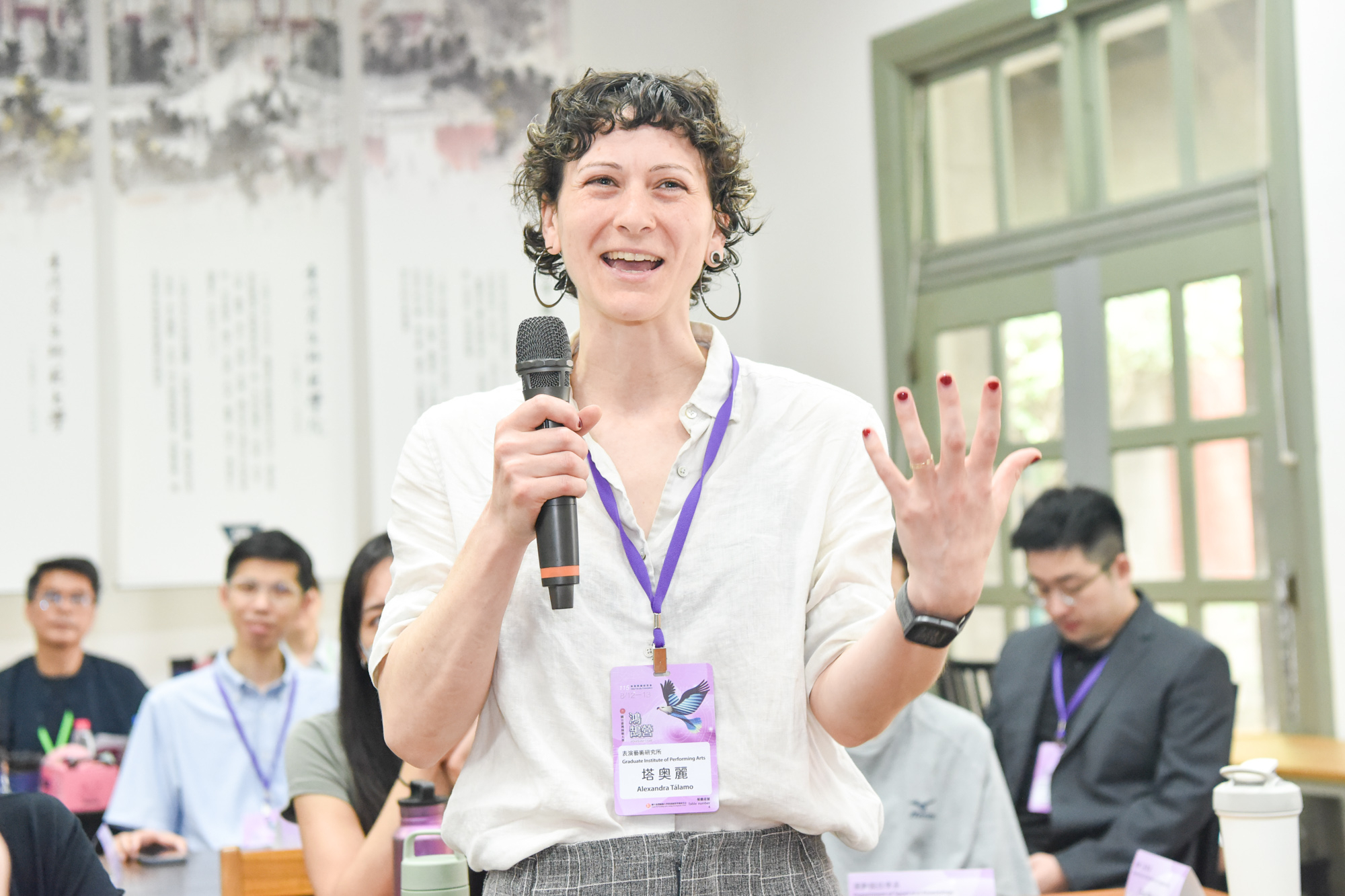
Australian scholar Assistant Professor Alexandra Tálamo of the Graduate Institute of Performing Arts, whose expertise includes experimental theater and cultural memory, said she was impressed by NTNU students’ physical abilities and performance potential. She plans to integrate Taiwan’s local cultural contexts and historical narratives into her teaching, guiding students to explore different forms of creative expression and develop theatrical works that combine local characteristics with international perspectives.
Senjooti Roy of the Graduate Institute of Social Work, who is from India, hopes to examine aging within a global context and draw on her research into the impacts of extreme climate events to explore aging policy, transnational care, and social issues related to climate change with students. Assistant Professor Valjakas Kadeljeman of the Department of Geography, a Paiwan Indigenous scholar, aims to combine geospatial information with social science research methods to guide students in exploring community planning and Indigenous issues, further connecting geography with social practice.
These new faculty members from around the world and across diverse academic disciplines will bring international perspectives and academic innovation to NTNU while further advancing interdisciplinary teaching, international exchange, and local social engagement. NTNU looks forward to working with its new faculty members to foster further innovation in teaching and research and open a new chapter in the University’s development.

